With new blush formulations launching constantly – from powders and creams to liquids and jellies – many clients struggle to identify which option truly suits their skin. For makeup artists and beauty professionals, understanding how to match blush formulation, shade and placement to skin type, age and complexion is key to achieving the most flattering result
Blush has the power to completely transform a makeup look; it can change the shape of the face, lifting or plumping the cheeks, it can blur the skin or add luminosity, and can of course add colour and life back into the complexion.
What is the best blush formulation for different skin types and ages?
While powder blush is still a popular formula, it’s no longer the only option on the market; now, we have cream, liquid and even jelly blush to consider, too.
When helping your client select the best blush for them, you’ll first want to help them identify which formula will complement their skin. To do so, you’ll want to assess their skin type, which may also require you to take their age into consideration.
“Oily skin may benefit more from powder formulations to help control shine, while those looking for a more hydrating finish may prefer liquid or cream formulas, explains Maddy Essex, senior brand educator for Jane Iredale, a makeup brand distributed by Healthxchange.
“Likewise, mature clients often achieve a smoother finish with liquid or cream formulas that avoid emphasising fine lines,” she adds.
Check out these tips for makeup application on mature skin.
Meanwhile, Anushka Patel, a makeup artist with over 15 years' experience and the head of makeup brand Et Al, distributed by iiaa, notes that for younger clients, a formula that offers longevity is often a priority.
To achieve this, you could suggest clients layer a cream blush with a powder blush to lock in the pigment. Alternatively, Patel shares that one trick she loves is to use a hydrating, warm-toned concealer as a bronzer before layering a talc-free powder blush on top. “This way, you get the glow of a cream with the staying power of a powder,” she explains.
How should clients choose the best blush shade for their skin tone and concerns?
While Patel believes that blush is a personal choice, if your client is unsure of the best blush shade for them, a good starting point is to take a look at their undertones.
As a general rule of thumb, Essex says that clients with warm undertones suit coral and peach hues, while those with cool undertones may find their complexion complemented by rosy or lilac blush shades.
Aside from undertones, pigmentation is also a factor to consider when helping your clients choose the best blush to suit them.
“If a client is worried about redness, I steer clear of blushes with pink undertones because they can make the redness stand out even more,” says Patel. “Instead, I’ll go for corals or neutral shades to balance things out.”
For skin with pigmentation or discolouration however, Patel recommends using blush with an orange undertone. “It helps counteract discolouration and gives the skin a more harmonious look,” she adds.
Quick blush shade guide for professionals:
-
Warm undertones: peach, coral
-
Cool undertones: rose, berry, lilac
-
Redness-prone skin: neutral or coral tones
-
Pigmentation/discolouration: orange-based blushes
Which blush formulas work best with different foundation types?
To ensure a seamless finish, it pays to consider the complexion, or base products, you will be applying the blush on top of.
“Cream or liquid blushes work particularly well over tinted moisturisers or lightweight, dewy foundations, as they blend effortlessly into hydrated textures,” notes Essex.
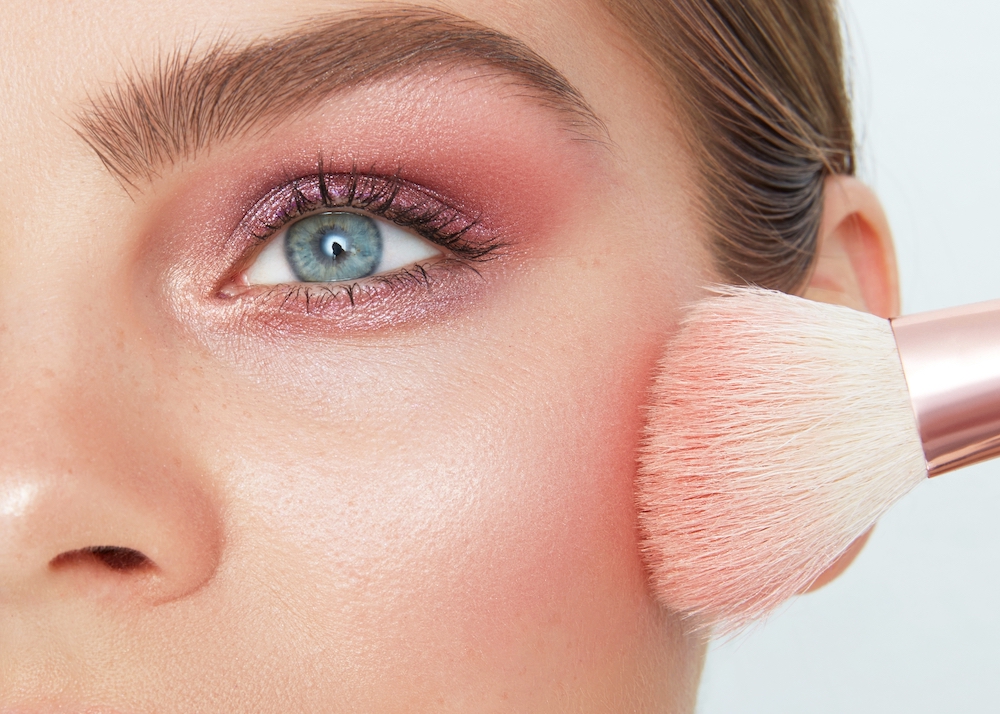
“Powder blushes pair ideally with mineral or set foundations, ensuring even application without patchiness,” she adds.
However, Patel highlights that technique can also play a role in pairing together different finishes and formulations.
Offering some tips, she explains, “If you’re applying powder blush over a liquid base, use a pressing motion rather than sweeping it across the skin; this helps keep the foundation intact and makes the blush last longer. And always start light build the colour gradually – if you go in heavy from the start, you’ll end up over-blending, which can disturb your base.”
How does blush placement affect face shape and facial balance?
Just like contour, blush placement can alter the shape of your client’s face.
“Applying blush higher on the cheekbones creates lift and definition, while placement on the apples softens features and adds roundness,” explains Essex. “Meanwhile, sweeping blush outward can elongate or slim the face,” she adds.
Blush FAQs for beauty professionals
What is the best blush formulation for different skin types?
The best blush formulation depends on the client’s skin type and finish preference. Powder blushes suit oily or combination skin, while cream and liquid blushes work best on dry, dehydrated or mature skin as they blend seamlessly and avoid emphasising texture.
Is cream or powder blush better for mature skin?
Cream and liquid blushes are generally better for mature skin, as they provide a smoother, more natural finish and are less likely to settle into fine lines. Hydrating formulas also help restore luminosity to the complexion.
Can blush make redness or pigmentation worse?
Yes, the wrong shade can accentuate redness or uneven tone. Pink-based blushes can highlight redness, while orange or neutral undertones help counteract discolouration and create a more harmonious finish.
Do cream blushes work over powder foundation?
Cream blushes work best over liquid or cream base products. When working over powder or set foundations, powder blushes are easier to control and provide a more even finish without disturbing the base.
How can I make blush last longer on the skin?
For improved longevity, layer textures. Apply a cream blush first, then lightly set with a powder blush in a similar shade. Using a pressing motion rather than sweeping also helps lock pigment into the skin.
Where should blush be placed to lift the face?
To create lift, apply blush higher on the cheekbones and blend upwards towards the temples. Placement on the apples of the cheeks creates a softer, rounder effect, while sweeping outward can help elongate the face.