
Early recognition of nail unit changes can support life-saving referrals in suspected cases of subungual melanoma
Skin therapist and nail professional Kelly Maria Edges explores the key warning signs to look out for and what action to take in practice.
What is subungual melanoma?
Subungual melanoma is a rare but aggressive form of skin cancer that develops in the nail unit. Despite its seriousness, it remains very misunderstood and frequently overlooked by clients and professionals. For nail technicians and therapists, understanding early visual signs and how to respond can play a huge role in client safety.
Subungual melanoma often presents as a brown or black vertical streak, irregular pigmentation, or colour change under the nail. It most commonly affects the thumb, big toe or index finger. Unlike many other skin cancers, it is not associated with sun exposure, which can lead to delayed suspicion or referral.
Case study: recognising subtle nail changes
Around two years ago, I noticed a faint light-brown vertical line running through my husband’s toenail (pictured below). I initially considered common causes such as trauma, pressure from footwear, or injury – none of which applied.
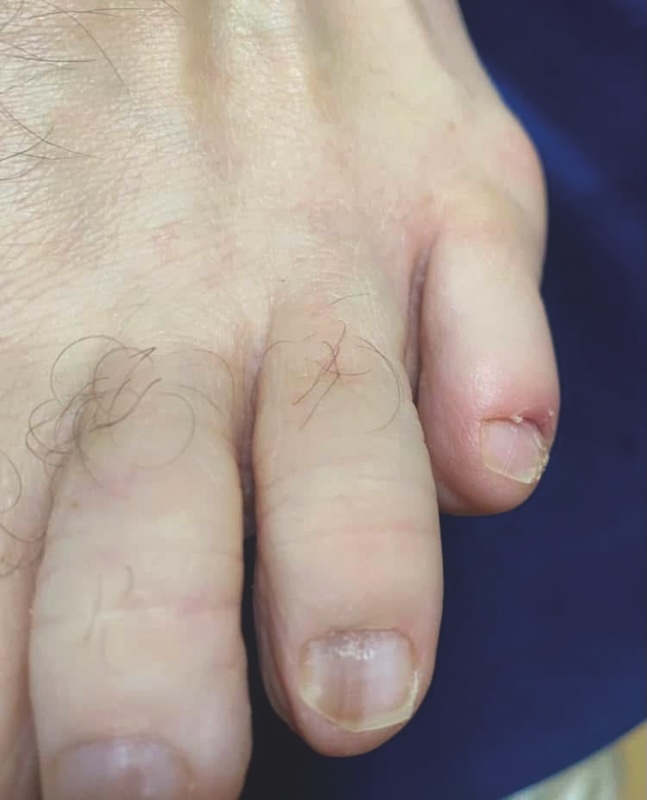
Although the change was subtle, I encouraged him to visit his GP. No immediate concern was raised, and he was advised to monitor the nail for changes. Over the following months, the pigmentation deepened in colour and increased in width, which are both recognised warning signs in nail pathology.
A second GP appointment again resulted in reassurance, with the pigmentation thought to be a fungal toenail. However, given the visible changes and my professional judgment, I advised him to ask for a specialist referral.
Following examination by a specialist, a biopsy was arranged. The results confirmed melanoma in situ, meaning the cancer was confined to the epidermis and had not spread. The subtype identified was acral lentiginous melanoma, a rare form that can arise in the nail unit, soles of the feet or palms of the hands.
Early detection allowed for surgery, including removal of the nail unit and surrounding tissue. Follow-up confirmed that no cancer remained.
What nail professionals should look out for
Learning points for nail pros:
- Know the warning signs: Be alert to longitudinal pigmentation, changes in colour or width, irregular borders, pigment spreading into surrounding skin, or changes that don't move with nail growth.
- Observe change over time: With client consent, photographic documentation can be invaluable in identifying progression and supporting appropriate referral.
- Communicate professionally: If something appears unusual, raise concerns calmly and factually, and never attempt to diagnose.
- Refer, don’t reassure: Encourage clients to seek medical advice and, where appropriate, suggest requesting referral to a dermatologist.
- Stay within professional boundaries: Our role is early recognition and safe referral, not diagnosis or treatment.
Professional education and ongoing awareness
Since this experience, I have undertaken further professional education, including an online skin cancer awareness course with the Skcin charity. I also work in partnership with Map My Mole, to take a closer look and document changes, always within my professional scope to support early recognition and referral.
Subungual melanoma is rare, but nail professionals are uniquely positioned to notice early changes that clients may overlook.

About the author
Kelly Maria Edges is a skin therapist, nail professional, and winner of Therapist of the Year at the Professional Beauty Awards 2026. She has been featured in national press for raising awareness of subungual melanoma and is passionate about professional education.
FAQ: Subungual melanoma for nail professionals
What is subungual melanoma?
Subungual melanoma is a rare form of skin cancer that develops in the nail unit, often appearing as pigmentation changes under the nail.
What does subungual melanoma look like?
It may present as a brown or black vertical streak, irregular pigmentation, widening or darkening of a line, or pigment that spreads into the surrounding nail or skin.
Is subungual melanoma caused by sun exposure?
No. Unlike many skin cancers, subungual melanoma is not linked to UV exposure, which can make it harder to recognise early.
Which nails are most commonly affected?
It most often affects the thumb, big toe, or index finger.
What should nail technicians do if they notice suspicious changes?
Nail professionals should not diagnose. Instead, they should document changes (with client consent), monitor progression where appropriate, and encourage the client to seek medical advice or a GP/dermatology referral.