
A year of change and innovation: 2025’s most impactful beauty industry developments
2025 has been a big year for the beauty industry, with sweeping regulatory changes, high-profile product launches and landmark business moves shaping the market.
Here, we round up the ten most-read stories on Professional Beauty’s website this year, highlighting the developments that captured the attention of industry insiders.
1. EU bans TPO in nail products: what beauty professionals need to know
From September the EU banned the use of trimethylbenzoyl diphenylphosphine oxide (TPO) in nail products, forcing brands and professionals across member states to stop making, selling or using any TPO-containing gels.
The photoinitiator, widely used for curing and colour stability, has been classified as potentially reprotoxic under EU regulations, despite industry debate over real-world exposure levels.
While the ban does not yet apply in the UK, a similar move is expected in late 2026.
Read the article here: Popular gel polish ingredient now banned in the EU
2. Caroline Hirons launches Skin Rocks Pro: pro-only skincare treatments
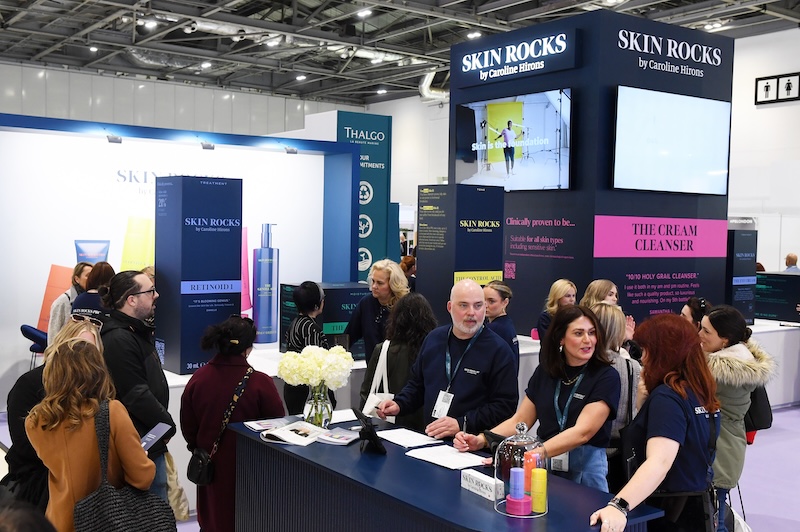
In March, skincare expert and industry icon Caroline Hirons debuted pro-only brand Skin Rocks Pro at Professional Beauty London.
Hirons has since unveiled the treatment line-up, which includes six customisable facials targeting hydration, breakouts, barrier repair, pigmentation and skin ageing, all incorporating the brand’s signature lifting or lymphatic massage.
Read the article here: Caroline Hirons's Skin Rocks Pro unveils initial treatments and training
Listen to our podcast episode with Caroline Hirons here: Season 2 Episode 1 - Caroline Hirons on respect for the beauty industry, social media and building a brand
3. Scotland announces new regulations for non-surgical cosmetic treatments
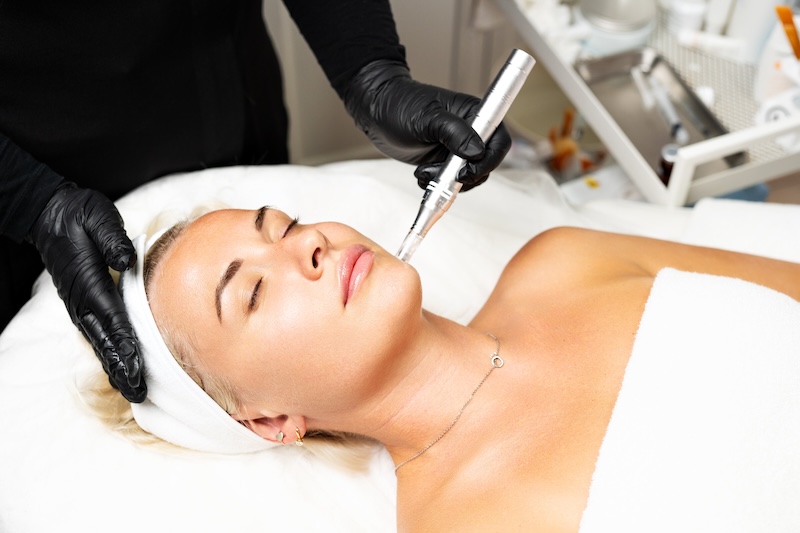
In October, the Scottish Government published the Non-Surgical Procedures and Functions of Medical Reviewers (Scotland) Bill, setting out a new regulatory framework for non-surgical cosmetic treatments.
The Bill proposes mandatory licensing for certain advanced procedures, bans treatments such as dermal fillers and strong chemical peels for under-18s, and introduces stricter safety and hygiene standards for premises.
Ministers will also gain powers to define qualifications and expand the list of regulated treatments. Several modalities, including radiofrequency and superficial chemical peels, have been reclassified as lower risk.
The legislation is expected to progress before May 2026 and could influence wider UK regulation.
Read the article here: Non-Surgical Procedures Bill: what the new Scottish regulations mean for beauty professionals
4. The UK Government proposes licensing scheme for aesthetic procedures
In more regulation news, the UK Government announced plans to introduce a licensing scheme for aesthetic and non-surgical cosmetic procedures in August.
Under the proposals, only healthcare professionals will be permitted to carry out the highest-risk treatments, while businesses offering fillers and botulinum toxins will need to meet strict licensing conditions set by local authorities.
Age restrictions will apply to certain treatments for under-18s, and enforcement measures will target unqualified operators. Further consultations will follow to define training and qualification requirements.
Read the article here: Government to regulate aesthetic procedures with new licensing and safety measures
5. Level 5 apprenticeship approved for aesthetic practitioners
In March, the Level 5 Aesthetic Practitioner – Skin Rejuvenation Apprenticeship Standard was approved by the Institute for Apprenticeships and Technical Education (IfATE), creating a government-funded progression route from beauty therapy into aesthetics.
Developed following consultation, the standard focuses on advanced skin rejuvenation and aims to support higher education standards as licensing for aesthetic treatments remains under discussion.
Read the article here: Approval of Level 5 Apprenticeship for Aesthetic Practitioners creates "groundbreaking" pathway for therapists
6. Professional Beauty London 2026 moves to October for Europe’s largest autumn event
Earlier this year, we announced that Professional Beauty London will move from its traditional March slot to October 4-5 in 2026, running alongside Salon International at ExCeL London to create the UK’s largest combined hair and beauty industry event.
The co-located show is expected to attract more than 45,000 professionals from across the UK and Europe, while retaining Professional Beauty’s dedicated zones and education programme.
Alongside this change, Professional Beauty Group has announced a new Salon Growth Summit, launching in March 2026 at Olympia London, focused on business education for salon and spa owners.
Read the article here: Professional Beauty London 2026 date change will create Europe's largest autumn industry event
7. Champneys acquires Buxton Crescent to expand spa portfolio
In November, spa group Champneys announced that it had acquired the iconic Buxton Crescent spa, marking its seventh destination spa and celebrating the group’s 100-year anniversary.
Supported by a £32 million investment from Cheyne Capital, the spa – an 81-bedroom five-star hotel with thermal pools, restored Victorian baths, saunas, steam rooms and fitness studios – will undergo refurbishment alongside Champneys’ six existing UK properties.
Read the article here: Champneys acquires Buxton Crescent, following £32m investment from Cheyne Capital
8. Professional Beauty Awards 2025 winners celebrate excellence in the industry
The winners of the Professional Beauty Awards 2025 were celebrated at a black-tie ceremony at The Brewery, London, on March 2. The evening recognised outstanding contributions across the beauty sector, from solo practitioners to large salon teams.
Winners included Elegant Touch Beauty (Large Salon of the Year), Aqua Sana Forest Spa (Employer of the Year), Kirsty McDonough (Nail Professional of the Year) and William Foley (Therapist of the Year).
Read the article here: Professional Beauty Awards 2025 winners announced
9. ASA bans LED face mask ads over unauthorised acne and rosacea claims
In November, the UK Advertising Standards Authority (ASA) banned adverts from Beautaholics, Luyors Retail, Project E Beauty and Silk’n for making unauthorised medical claims about LED face masks.
The rulings followed an ASA investigation using AI monitoring, which identified claims suggesting the devices could treat acne and rosacea, both classified as medical conditions.
The regulator confirmed that only MHRA-registered medical devices or licensed medicines may make such claims.
Read the article here: ASA bans LED face mask adverts over acne and rosacea treatment claims
10. Nursing and Midwifery Council bans remote prescribing of cosmetic medicines
The Nursing and Midwifery Council (NMC) announced that from June 2025, nurses and midwives must conduct face-to-face consultations before prescribing non-surgical cosmetic medicines, including anti-wrinkle injections and aesthetic emergency kit items, effectively banning remote prescribing for these treatments.
Read the article here: NMC to ban remote prescribing of non-surgical cosmetic medicines

square.jpg)