The educator, creative director and Glow Up finalist shares how makeup became his anchor, why mindset matters as much as technical skill, and how living with Tourette's syndrome has shaped his career
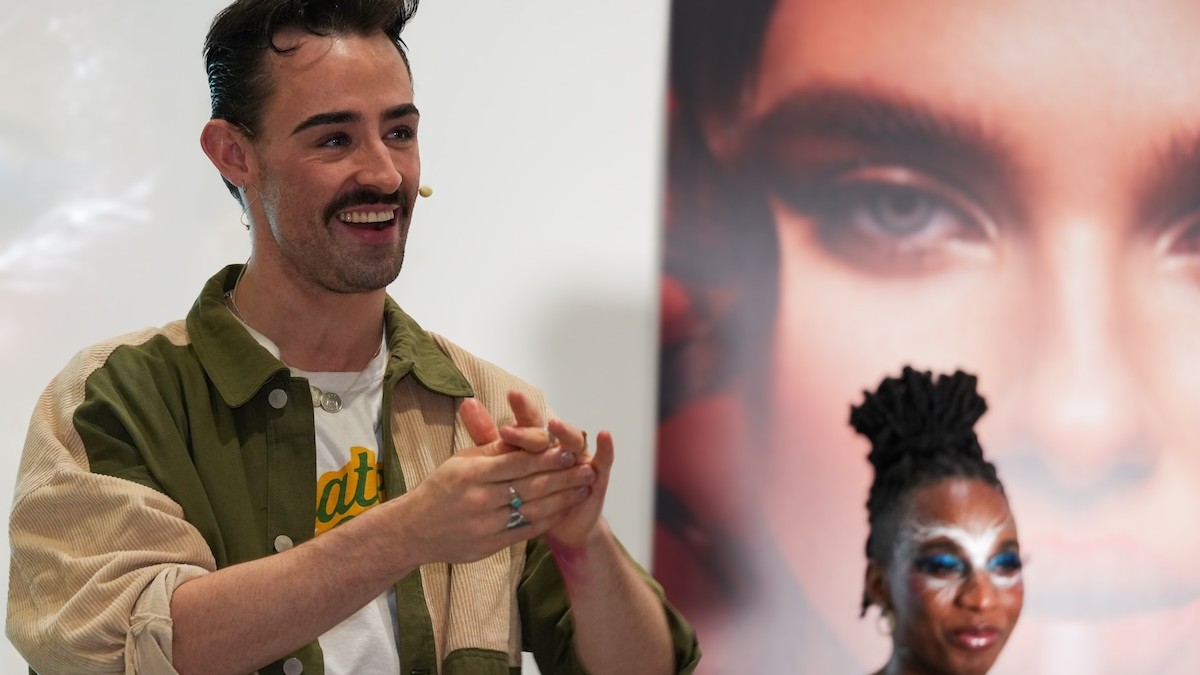
If you've watched BBC's Glow Up: Britain's Next Make-Up Star, chances are you'll already know James Mac. Known professionally as James Mac, or James MacInerney, the Irish makeup artist has built a career spanning fashion weeks, editorial, education, television and international masterclasses.
Beyond his creative work, Mac has become an advocate for greater understanding of Tourette's syndrome, using his platform to educate the beauty industry through his popular Tourette's Tuesdays series on Instagram. In this interview with Professional Beauty, he reflects on the experiences that shaped his career, the importance of resilience in the makeup industry, and why creativity has always been about much more than aesthetics.
Fresh from Milan Fashion Week when we speak, Mac is understandably tired and running on adrenaline. Yet there's an immediate sense of presence that's become synonymous with his work: thoughtful, candid and generous. For someone whose career now spans fashion, education, television and live stages, it's striking how often the conversation returns to one theme – staying grounded.
"I've always been a creative child. I've always been a creative artist," he says. "I decided to become a makeup artist when I trained in a makeup academy in Ireland in 2017."
That decision sparked a career that's evolved far beyond applying makeup.
"Nine years on, I'm not just a makeup artist," he explains. "I'm a creative director and a manager of my own freelance brand."
Today his work includes fashion editorial, creative events, education and masterclasses.
"It's funny how the path has kind of spun me into doing more conversations like this," he says. "It's gone beyond the makeup brush."
Living visibly with Tourette's syndrome
Mac's move into education and advocacy has been shaped by his experience of living with Tourette's syndrome throughout his life.
"Tourette's has been part of my life for mostly all my life," he explains.
His symptoms began when he was around three or four years old, with involuntary motor tics.
"Mine is a motor neuron disorder where I have these involuntary stims and tics specifically in my neck, only to the right," he says before adding with a smile: "Can you imagine ever looking to the left? Who would ever want to do that?"
Humour has helped, but growing up with Tourette's in rural Ireland brought challenges.
"It was hard enough growing up queer in rural Ireland, but to then throw Tourette's into the pot..."
One of the biggest barriers, he says, has always been misunderstanding.
"I wish people knew there are two types of Tourette's. I don't have coprolalia, which is the verbal form."
Mac believes popular culture has contributed to misconceptions.
"Do you remember Pete Bennett from Big Brother? He was the first public figure on TV living with Tourette's."
While important for representation, it also reinforced a limited public understanding of the condition.
That's one reason he launched his Tourette's Tuesdays series on Instagram.
"If you're unsure of anything, ask," he says. "There's no bad question because I know it's coming from a place of love."
For Mac, curiosity creates inclusion. Whispering behind someone's back does not.
"When I get in the zone, the Tourette's almost evaporates."
James Mac
How makeup became an anchor
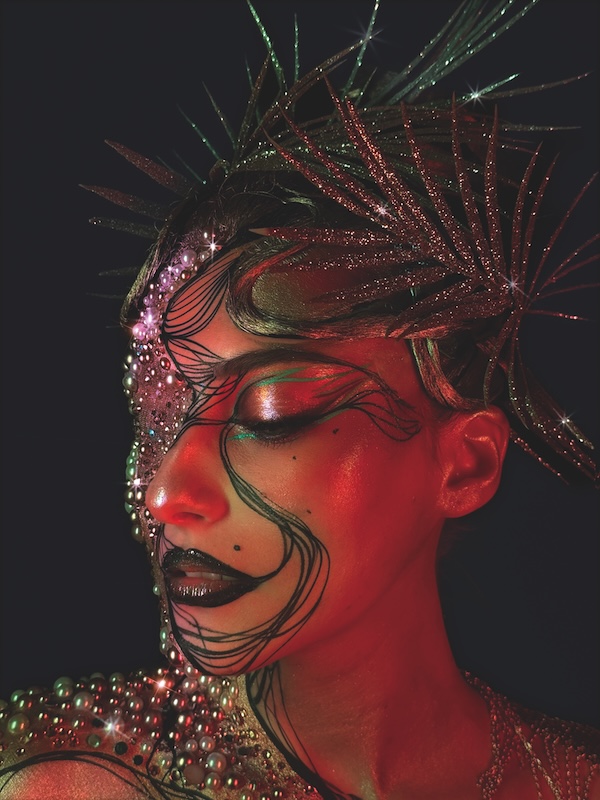
For Mac, makeup has always represented something much deeper than appearance.
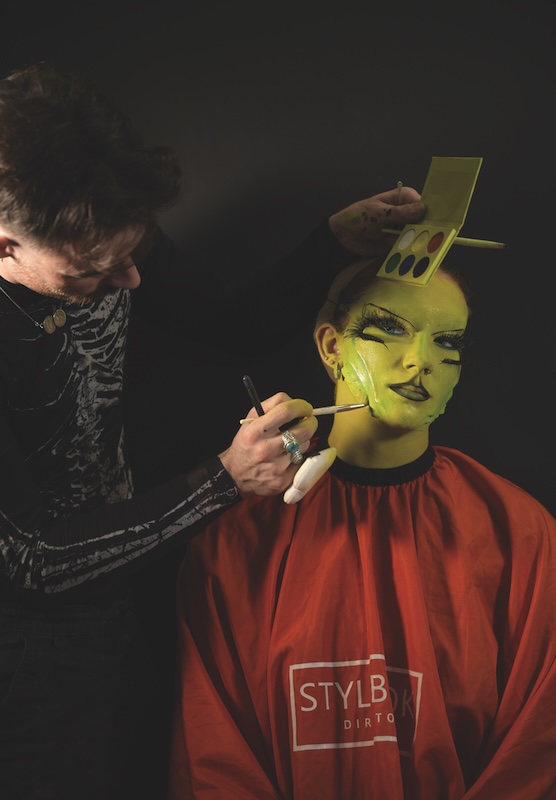
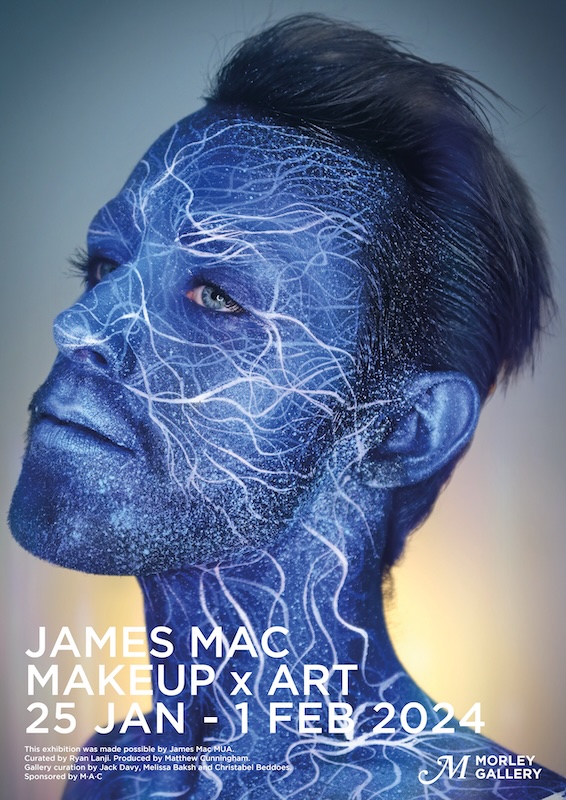
During the Covid-19 pandemic, he created a gallery exhibition featuring 25 artistic makeup looks – some taking up to 12 hours to complete.
"In those unlimited days of time allowance in Covid, I was doing looks that took me 12 hours," he recalls.
"What I noticed in the depth of those hours was that the Tourette's almost evaporated. It was connecting to my artistic flair and that stimulus when I realised this is as much of a thought process as a makeup look."
That experience changed his understanding of both creativity and his condition.
"When I get in the zone – and I think we share this as artists – this is what really helps me living with Tourette's," he says.
"That's why makeup is a passion. That's why I've kept it as my career."
He doesn't pretend the industry is easy.
Fashion weeks, television productions and live events can all push his nervous system into overdrive.
The difference now, he says, is awareness.
"I have to be accountable for small little daily practices. Makeup has helped me realise and educate myself so much more about living with Tourette's."
What Glow Up taught James Mac
Appearing on season two of BBC's Glow Up: Britain's Next Make-Up Star proved to be a defining moment.
Surprisingly, the biggest lesson came in week one.
"This is going to sound odd because it was week one when I was in the red chair," he says, referring to the elimination challenge.
"It definitely gave me fire in my belly."
At the time, he questioned whether living with Tourette's would limit his career.
"I definitely had this portrayal of living with Tourette's as a 'lesser than' and that I couldn't have a sustainable career or I didn't have the space to be a makeup artist.
"Like, how can I do both?"
Standing in front of the cameras changed that perspective.
"I remember saying, 'I'm not going home.' And that was a fight or flight where I fought for myself."
His biggest takeaway?
"I would say skill was 50% of Glow Up," he says.
"It's your mindset as much as what you learn."
He also credits the programme with helping him become comfortable speaking publicly, but watching himself back wasn't easy.
"I'd never recorded myself or seen myself on camera because I'm always looking away."
Seeing his Tourette's discussed on screen proved emotional, though.
"It's taken me half a decade to realise that it helped people to have representation."
"Skill was 50% of Glow Up. It's your mindset as much as what you learn."
James Mac
Managing mental health in the beauty industry
Ask Mac what advice he'd give beauty professionals looking after their wellbeing and his answer is immediate: breathing.
He begins guiding us through a simple exercise.
"Take a deep breath, hold it, and then exhale slowly.
"You can't tell me that didn't help you feel more relaxed."
Breathwork, he says, is one of the simplest ways to regulate the nervous system.
"We are all so hyperstimulated."
Alongside breathwork, he's explored somatic yoga, lymphatic treatments and other techniques designed to activate the parasympathetic nervous system.
"It gives me an opportunity to feel more regulated."
His advice doesn't require hours of practice.
"Just five minutes," he says.
"This is a wild industry, but you have to be responsible for these things if you want to be your best self."
That philosophy underpins his definition of resilience.
"My stick-with-it-ness to be a makeup artist living with Tourette's syndrome is because of that tenacity and accountability for prioritising my welfare and my wellbeing."
Finding inspiration beyond beauty trends
While social media often dominates conversations around creativity, Mac looks elsewhere.
"I've always gone into contemporary art museums, and look to my family and friends and the untold stories," he says.
"I've lived about six different lives."
Teaching internationally has also become a source of inspiration, and he enjoys translating people's personal stories into conceptual makeup designs.
What's next for James Mac?
Education remains firmly at the centre of Mac's ambitions.
"I love to educate and teach. I want to bring my masterclass programme around the world."
Stage work, once intimidating, has become one of his strengths.
"I feel so much more comfortable on stage, and I never thought I would have that stage presence because of the Tourette's."
He's also developing a podcast exploring the stories behind people's success.
Tentatively titled The Things That Make You Tick, it will focus on the challenges people overcome rather than simply celebrating achievements.
"People always know your 'up there' moment.
"It's the 'behind the closed doors' parts they want to know more about."
Alongside continuing Tourette's Tuesdays, Mac reveals he's writing a book documenting his journey and what he's learned about resilience.
As our conversation ends, he's preparing to head straight to a film premiere.
Reflecting on how far he's come, he asks himself one final question.
"What would my 11-year-old self say?"
Perhaps the answer lies in the message he now shares with others.
"Everyone has a path," he says.
"My story is the Tourette's.
"Everyone has a reason why they're here."
All images courtesy of James Mac.
Frequently asked questions
Who is James Mac?
James Mac, whose full name is James MacInerney, is an Irish makeup artist, creative director, educator and Glow Up: Britain's Next Make-Up Star finalist. He works across fashion, editorial, television, education and international masterclasses.
What season of Glow Up was James Mac on?
James Mac appeared on season two of BBC's Glow Up: Britain's Next Make-Up Star, where he became known for both his creative artistry and his openness about living with Tourette's syndrome.
What is Tourette's Tuesdays?
Tourette's Tuesdays is James Mac's educational Instagram series, where he answers questions about Tourette's syndrome and encourages open conversations to challenge misconceptions and improve understanding.
What advice does James Mac have for aspiring makeup artists?
Mac believes success depends on mindset as much as technical ability. He encourages aspiring artists to stay resilient, remain accountable for their wellbeing, seek inspiration beyond beauty trends and embrace opportunities to keep learning.
You might also like: