
The no-downtime treatment is gaining popularity for hydration, glow and enhanced product penetration – but experts say managing client expectations is key
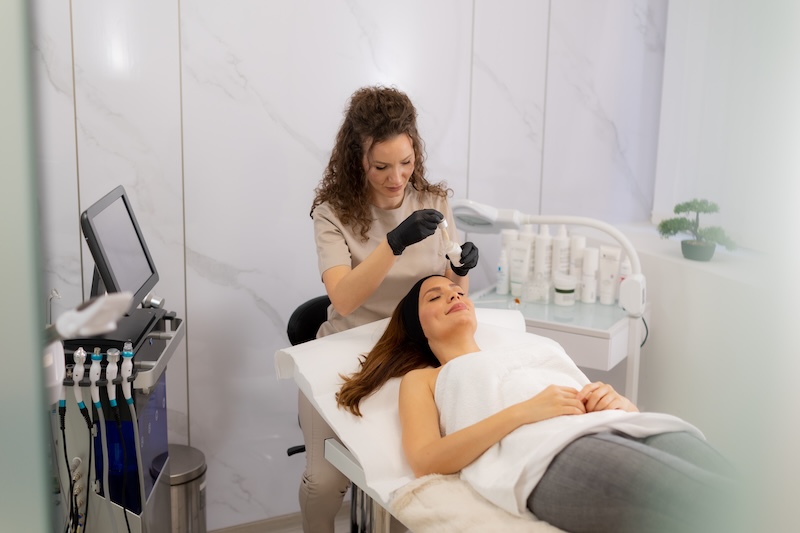
Nanoneedling is becoming one of the most requested skin treatments in clinics and salons thanks to its promise of brighter, smoother and more hydrated skin without downtime. Often positioned as a gentler alternative to microneedling, the treatment appeals to clients who want visible skin rejuvenation without redness, peeling or recovery time.
But while nanoneedling is increasingly popular on treatment menus and social media, skin experts say it’s important therapists understand exactly what the treatment can – and can’t – achieve.
Unlike microneedling, nanoneedling works only within the upper layers of the epidermis and is primarily designed to enhance product penetration and improve surface-level skin quality, rather than stimulate significant collagen production.
So, what exactly happens in the skin during a nanoneedling treatment, who is it best suited to and where does it fit within a professional treatment plan?
What is nanoneedling?
According to Dermalogica education manager Candice Gardner, nanoneedling is also referred to as “nanoinfusion”, “transdermal serum infusion” or “nano microchanneling”.
She explains, “Nanoneedling is a superficial skin treatment that uses very fine, short cones (often silicone or stainless steel) to temporarily disrupt the corneocyte barrier and create micro-channels in the upper epidermis only.”
Rather than creating controlled injury within the skin, Gardner says the treatment works through “micro-exfoliation and enhanced infusion”.
“These micro-channels temporarily increase permeability, allowing targeted ingredients to penetrate more effectively,” she explains.
At skin level, this can lead to:
- improved hydration
- smoother-feeling skin
- enhanced product absorption
- mild superficial exfoliation
- brighter-looking skin
Gemma Halil, advanced skin specialist at The Lodsworth Clinic and lead educator at pHformula, says she often describes the treatment to clients as a “vitamin infusion facial”.
“Using medical-grade stainless steel nanoneedles, we work very superficially within the upper 0.15mm of the epidermis, creating tiny pathways that allow active ingredients and vitamin infusion to penetrate far more effectively into the skin,” she says.
“The result is enhanced hydration, brighter skin, improved texture and that gorgeous post-treatment glow clients become obsessed with.”
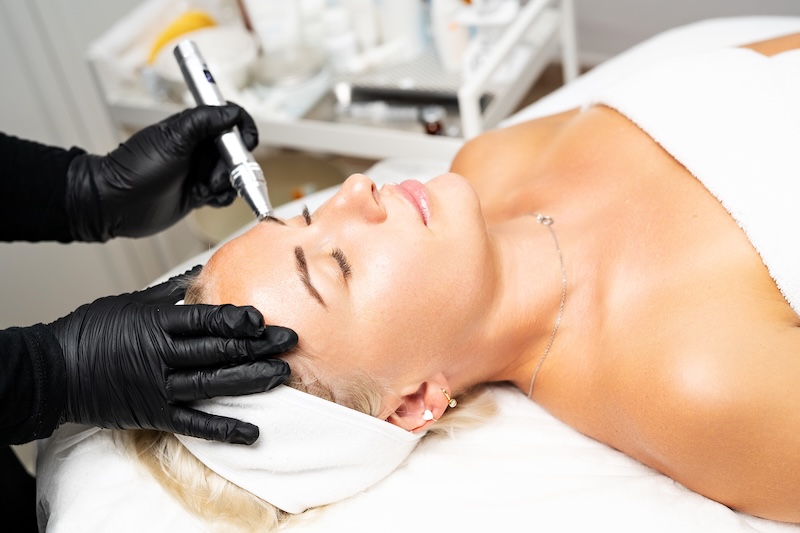
Nanoneedling vs microneedling: what’s the difference?
One of the biggest misconceptions around nanoneedling is that it delivers the same results as microneedling.
Gardner says the key difference is depth.
“Nanoneedling is 0.15mm or less on the skin (stratum corneum),” she explains. “Microneedling is approximately 0.2–2.5mm depending on location and indication.”
Traditional mesotherapy, meanwhile, can reach between 1mm and 6mm through injectable delivery methods. Find out more about the differences between microneedling and mesotherapy here.
While microneedling works by creating controlled injury to trigger wound healing and collagen induction, nanoneedling does not reach deep enough to stimulate a significant wound-healing response.
Kirsten Desai, head of education at Gerrard International, explains, “Nanoneedling works on the very top layer of the epidermis and creates tiny indentations in the skin to enhance product absorption and promote cellular turnover.”
She adds, “Microneedling can be performed with a needle depth ranging from 0.5mm–1.5mm to create micro channels in the dermis layers of the skin to help promote collagen formation and trigger the body’s wound healing response.”
Does nanoneedling stimulate collagen?
Experts largely agree that nanoneedling should not be marketed as a collagen-induction treatment.
Gardner says, “Because it does not reach the dermis or trigger a wound-healing response, collagen stimulation is not an associated benefit.
“Any perceived ‘plumping’ is typically due to hydration, improved surface texture and infusion of actives, not structural change.”
Desai agrees that the treatment is primarily surface level, although she notes that improved circulation and cellular turnover may contribute to healthier-looking skin overall.
Halil says she believes there can still be “a beautiful regenerative response happening within the skin”, especially when nanoneedling is paired with professional transdermal solutions, but she is careful to manage expectations with clients seeking more corrective results.
“If somebody requires deep collagen remodelling or significant scar revision, I will still progress them onto more advanced treatments,” she says.
What skin concerns is nanoneedling best for?
Because nanoneedling works within the epidermis, experts say it performs best when the goal is improving overall skin quality rather than correcting deeper structural concerns.
Common treatment indications include:
- dehydration
- dull skin
- rough texture
- uneven skin tone
- early signs of skin ageing
- mild textural irregularities
- maintenance between advanced treatments
Halil says she also sees strong results when using nanoneedling within rosacea restoration programmes once inflammation has been reduced and the barrier strengthened.
“One of my favourite ways to use it clinically is within rosacea restoration journeys,” she explains.
Experts also highlight nanoneedling as a strong option for:
- nervous first-time clients
- clients wanting no downtime
- sensitive or reactive skin types
- impaired skin barriers
- event-prep facials
- pregnancy-safe treatment plans when appropriate products are selected
Where are the limitations of nanoneedling?
While nanoneedling can deliver immediate glow and hydration benefits, experts warn therapists not to oversell its capabilities.
Gardner says nanoneedling should not be relied upon for:
- deep wrinkles
- acne scarring
- significant loss of firmness
- advanced hyperpigmentation
“These concerns require treatments that reach the dermis or trigger more intensive skin responses,” she explains.
Halil agrees, adding, “Nanoneedling is amazing for skin quality, glow, hydration and enhanced product delivery, but I would never position it as a replacement for deeper corrective procedures.”
How does nanoneedling affect the skin barrier?
One reason nanoneedling appeals to many therapists is that it creates minimal inflammation compared with more aggressive modalities.
However, experts stress that the skin barrier still needs to be respected.
Gardner explains that nanoneedling “temporarily disrupts the outermost barrier, increasing permeability for a short window”.
This can improve delivery of hydrating and conditioning ingredients, but overuse or excessive pressure can compromise barrier integrity.
Halil says, “Because penetration is so beautifully enhanced, we can really customise the skin journey in a much more targeted and intelligent way.”
However, she adds that understanding ingredient behaviour and inflammation is critical because “the skin becomes far more receptive during treatment”.
Contraindications and who should avoid nanoneedling
Although nanoneedling is considered low risk, experts say therapists still need to carry out a thorough consultation and skin analysis before treatment.
Contraindications include:
- active acne breakouts
- skin infections
- open lesions or wounds
- highly inflamed skin
- severely compromised skin barriers
- recent advanced resurfacing procedures
- recent injectables
- severe irritation or eczema flare-ups
Gardner says therapists should also avoid treating “highly sensitised skin” or clients experiencing recent over-exfoliation or environmental damage.
Desai stresses the importance of hygiene protocols, including single-use nano cartridges, gloves and infection control standards.
What products should therapists use with nanoneedling?
Because nanoneedling significantly increases product penetration, all three experts say professional product selection is essential.
Gardner recommends:
- low-irritation professional formulations
- hydrating ingredients
- barrier-supportive formulas
- ingredients specifically designed for enhanced penetration
Halil says, “Because absorption is significantly increased, I only work with professional formulations designed for transdermal delivery and skin compatibility.”
Experts advise avoiding:
- strong acids
- high-strength retinoids
- heavily fragranced products
- aggressive exfoliants
- unnecessary irritants
- products not formulated for enhanced penetration
Desai also recommends avoiding essential oils and strong acne actives during treatment.
How should therapists incorporate nanoneedling into treatment plans?
Rather than positioning nanoneedling as a standalone corrective treatment, experts say it works best as:
- an add-on treatment
- a maintenance facial
- part of a progressive skin journey
- a bridge between basic facials and advanced modalities
- support between microneedling sessions
Halil says many patients at her clinic begin with nanoneedling before progressing to more advanced procedures.
“It allows me to build skin strength, improve barrier health and introduce clients to advanced skin treatments in a really comfortable, confidence-building way,” she explains.
Gardner adds that consistency is key for maintaining results, particularly when targeting hydration and texture.
What results can clients realistically expect?
The immediate appeal of nanoneedling is the visible glow clients often notice straight after treatment.
Experts say realistic results include:
- brighter-looking skin
- improved hydration
- smoother texture
- enhanced radiance
- healthier-looking skin quality
However, therapists should communicate that results are largely temporary and surface-level without ongoing treatment and homecare.
Halil says, “Healthy skin is a journey, not a one-off treatment.”
Aftercare advice should focus on:
- barrier repair
- daily SPF use
- hydration
- avoiding over-exfoliation
- avoiding heat treatments for 48 hours post-treatment
Is nanoneedling worth adding to a treatment menu?
Industry experts believe nanoneedling fills an increasingly important role within modern professional skincare.
As clients move towards lower-downtime, barrier-conscious treatments, the modality is becoming popular as a gateway between traditional facials and more advanced skin procedures.
Gardner describes it as “a low-risk, no-downtime enhancement” and “a way to maximise product performance in the treatment room”.
Halil believes the industry is shifting away from aggressive over-treatment and towards “smarter, regenerative skin health approaches”.
“For me, it bridges the gap perfectly between advanced skincare and more intensive procedures whilst remaining approachable, relaxing and results-driven,” she says.
You might also like:
- Why skin pH matters: the skincare science behind barrier health and active ingredient performance
- Why the skin microbiome is the key to a healthy skin barrier
- How chronic stress ages the skin and what beauty professionals can do about it
- Biomicroneedling explained: how spicules are transforming natural skin rejuvenation
FAQ: Nanoneedling explained
What is nanoneedling?
Nanoneedling is a non-invasive skin treatment that uses very fine silicone or stainless steel cones to create tiny superficial channels in the upper layer of the skin. The treatment enhances product penetration, improves hydration and boosts skin radiance without causing significant injury or downtime.
What does nanoneedling do for the skin?
Nanoneedling helps improve skin hydration, smoothness and glow by increasing the absorption of professional skincare products into the epidermis. It can also support gentle exfoliation and improve overall skin texture.
Does nanoneedling stimulate collagen?
Nanoneedling does not stimulate collagen in the same way as microneedling because it does not reach the dermis or trigger a wound-healing response. Any plumping effect is usually linked to hydration and improved surface texture rather than structural collagen remodelling.
What is the difference between nanoneedling and microneedling?
Nanoneedling works within the upper epidermis at a depth of around 0.15mm to improve hydration and product absorption. Microneedling penetrates deeper into the dermis to stimulate collagen production and wound healing for concerns such as acne scarring, wrinkles and skin laxity.
Is nanoneedling better than microneedling?
Nanoneedling is not necessarily better than microneedling – the right treatment depends on the client’s skin concerns and goals. Nanoneedling is best for glow, hydration and maintenance, while microneedling is more suitable for deeper corrective concerns such as acne scarring and skin ageing.
What skin concerns is nanoneedling best for?
Nanoneedling works best for:
- dehydrated skin
- dull skin
- rough texture
- mild fine lines
- uneven skin tone
- sensitive skin
- maintenance between advanced treatments
Can nanoneedling help acne scars?
Nanoneedling may slightly improve the appearance of very mild surface texture irregularities, but it is not considered an effective standalone treatment for deep acne scarring. Microneedling or other regenerative procedures are usually more suitable for scar revision.
Is nanoneedling safe for sensitive skin?
Yes, nanoneedling is generally considered safe for sensitive or reactive skin when performed correctly with appropriate professional products. However, therapists should avoid treatment on highly inflamed, infected or severely compromised skin.
Is there downtime after nanoneedling?
Nanoneedling typically involves little to no downtime. Most clients leave treatment with brighter, hydrated-looking skin and can return to normal daily activities immediately, although heat treatments and active skincare should usually be avoided for 48 hours.
How often should clients have nanoneedling?
Many therapists recommend nanoneedling as a course of treatments or as part of an ongoing skin maintenance plan. Depending on the skin condition and products used, treatments may be carried out every one to four weeks.
What products should be used with nanoneedling?
Professional-grade, low-irritation and barrier-supportive products are recommended for nanoneedling. Therapists should avoid using strong acids, retinoids, heavily fragranced formulas or products not designed for enhanced penetration.
Who should avoid nanoneedling?
Nanoneedling should be avoided on clients with:
- active acne breakouts
- skin infections
- open wounds or lesions
- highly inflamed skin
- severely impaired skin barriers
- recent advanced resurfacing treatments
- recent injectables

square.JPG)