Beauty professionals are increasingly being asked questions about nutrition, healthy ageing and how lifestyle influences skin. Beauty therapist and health coach, Donna Carey, explores why understanding the body’s natural repair processes could be the missing piece in achieving better treatment outcomes.
There has never been more discussion about nutrition than there is today.
Protein powders, collagen drinks, amino acid supplements, GLP-1 medications, "high-protein" foods and an endless stream of social media advice have left many clients more confused than informed.
But before looking at what we can add, perhaps we should first understand what the body is naturally designed to do.
The body’s role in treatment recovery and results
Imagine a client has invested hundreds of pounds in a course of microneedling. You've completed a thorough consultation. Your treatment technique is excellent. Your device performs exactly as intended.
You explain the aftercare and your client leaves excited about the improvements to come. But every advanced treatment we perform creates a controlled biological response.
Microneedling. Radiofrequency. Laser. Chemical peels. The technology may differ. The biology does not. Every treatment relies on the body's ability to heal, and this healing depends on far more than the treatment itself.
Why stimulating collagen is only half the story
Our profession has become incredibly skilled at stimulating collagen. Manufacturers continue to develop exciting new technologies, and treatment protocols become more sophisticated every year.
Yet I sometimes wonder whether we've overlooked an equally important question: Can the body actually build the collagen we've just stimulated?
For too long our industry has focused on stimulating collagen while paying far less attention to whether the client has the biological capacity to repair, regenerate and build it in the first place.
Collagen is not created by a device. It's created by the client's own biology. Protein contributes by supplying amino acids after digestion, and those amino acids become the building blocks the body uses to manufacture collagen and thousands of other proteins essential for repair.
But collagen production also depends on adequate energy intake, vitamins and minerals, healthy circulation, restorative sleep, blood glucose regulation, metabolic health and countless other physiological processes working together.
Should beauty therapists discuss nutrition with clients?
Whenever nutrition is discussed within beauty, there is understandable concern about professional boundaries.
It's important that beauty therapists shouldn't diagnose medical conditions or prescribe therapeutic diets outside their scope of practice. Professional standards matter. However, understanding nutrition and prescribing nutrition are two entirely different things. Equally important is understanding the physiology that underpins healing.
Not because we should replace registered dietitians or nutrition professionals, but because understanding how the body repairs tissue helps us become better practitioners. It allows us to ask better questions, set realistic expectations, recognise when lifestyle may be influencing outcomes, and know when referral to another qualified healthcare professional is appropriate.
How lifestyle factors affect skin healing and treatment outcomes
One of the greatest challenges facing our clients today is the sheer volume of conflicting information. One day they are told to increase protein, the next they are encouraged to buy collagen supplements.
The following week they are advised to take essential amino acids or follow the latest influencer's diet. Most of these recommendations are made with little understanding of the individual receiving them.
The twenty-five-year-old athlete trying to build muscle is different to the fifty-eight-year-old woman navigating menopause, chronic stress, poor sleep, reduced muscle mass or prediabetes. Neither approach is necessarily wrong, but neither is universally right. Protein is not the issue, context is.
As professionals, perhaps our role is becoming less about providing answers and more about helping clients ask better questions.
Why beauty professionals need to integrate physiology
When I first trained as a beauty therapist, anatomy and physiology formed the foundation of our education. That education gave me something far more valuable than knowledge - it gave me curiosity.
Curiosity to ask why one client responds beautifully while another heals more slowly. Why one treatment succeeds beyond expectations while another produces only modest change. And why lifestyle sometimes matters as much as technology.
Today's therapists have access to extraordinary innovation, and the technology available to our profession is something I could only have imagined when I qualified. But perhaps, in our excitement to embrace new devices, we have drifted a little away from the biological principles that underpin every treatment we perform.
I don't believe the future of treatment lies in choosing between technology and biology. I believe it lies in bringing them back together.
The client as an active participant in the treatment journey
One sentence has become central to the way I practice: "I perform the treatment. The body performs the healing."
To me, that applies whether we are discussing skincare, laser, radiofrequency, microneedling, injectables or surgery. Technology initiates repair, but only the body can complete it - and understanding this changes consultations, expectations and client education.
Most importantly, it empowers clients to recognise that they are not passive recipients of treatment. They are active participants in the outcome.
Combining technology, biology and healthy ageing
Beauty therapists have always been caregivers. We have always wanted the very best outcomes for our clients.
Perhaps the next evolution of our profession is not simply becoming better at delivering treatments. It's becoming better at understanding the remarkable biology that allows those treatments to succeed.
This is not about replacing beauty therapy with nutrition, nor is it about replacing aesthetics with health coaching. It is about recognising that every treatment takes place inside a living, breathing human body. One that deserves to be understood as well as treated.
And perhaps the greatest treatment advances won't come from the next generation of devices. They will come from a deeper understanding of the remarkable biology those devices depend upon.
About the expert author
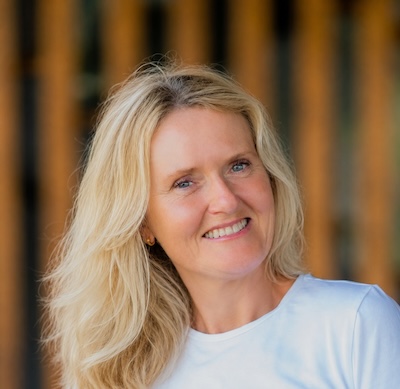
Donna Carey is an advanced beauty therapist and salon owner of Spring's Health & Beauty Clinic in Stockton Heath, who has spent almost 40 years in the beauty industry. She is a Board Certified Health & Wellness Coach, Functional Medicine Health Coach and an NHS Diabetes Prevention Programme coach. Donna specialises in skin longevity, women's wellbeing and ageing.