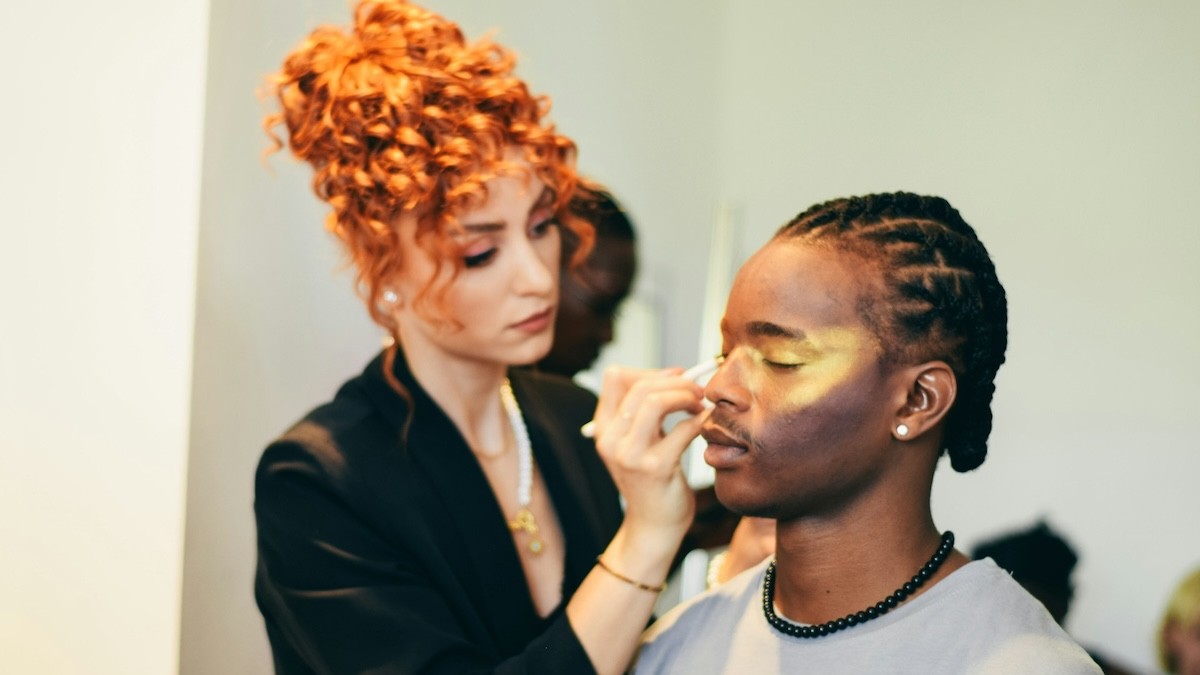
Social media may help you get seen, but can it really convert clients? We break down when MUAs need a website, when social works best, and why using both delivers stronger results
The beauty industry is booming, contributing £13.5 billion a year to the UK’s Gross Domestic Product (GDP). For the makeup artist (MUA) industry, this growth presents both huge opportunities and fierce competition as demand for services rises.
Whether you’re an aspiring MUA or expanding your client list, you need a solid marketing strategy in place to ensure you’re ready to compete.
But, when looking at the best online marketing options for makeup artists, which direction should you go: social media or a portfolio website?
Learn more in this guide and discover why a blend of both could be your best bet for winning new clients.
Should makeup artists have a website?
Yes, makeup artists should definitely have a website. A dedicated site brings professionalism to your MUA brand and provides you with the space to go into more detail about your services, whilst also:
- Highlight your specialities
- Expand on your values
- Add information on fees and availability
All within a single online platform.
As a makeup artist, your portfolio site will likely be the central hub of your digital marketing.
It’s a place to direct existing leads to (including from social media) and find new potential clients.
Potential customers will specifically look for your website for information on your MUA services, view your portfolio of work and check that you’re a credible brand.
Speaking of credibility, an online portfolio provides the perfect opportunity to show yours off.
A well-designed site is a major green flag across target markets, with 75% of consumers judging the trustworthiness of a business based entirely on how it looks. That’s why using a trusted drag-and-drop portfolio website builder like Portfoliobox is one of our top tips for showcasing your brand and converting leads into paying clients.
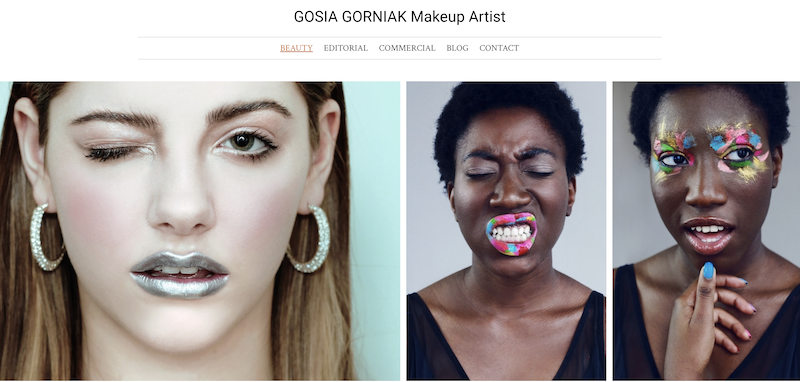
You can also prove your positive reputation and experience on your portfolio website by:
- Adding glowing client testimonials.
- Publishing blog posts on past work and helpful how-to guides.
- Create a gallery view of all your makeup looks IRL (including before and after visuals).
How social media drives discovery for makeup artists
In the UK, social media is the top sales generator for 1 in 4 small businesses. It’s a powerhouse for finding new leads and raising brand awareness for makeup artists, making it a digital marketing staple.
As a MUA, visual social media platforms give you a space to show off your skills. Explore channels like Instagram and TikTok, which are perfect for showcasing your makeup looks and real-time transformations.
It also helps you build a more accessible, personal brand. You’re given the chance to show your face and speak directly to your potential clients, all while showing off your skills in a way that feels credible and authentic.
Over time, this builds loyalty with your followers, who aren’t just connecting with your business, but with you.
If you’re a makeup artist, social media is a no-brainer. It’s free to get started, comes with easy-to-use marketing tools and scheduling features, and lets you connect directly with potential clients to generate tons of new interest in your MUA business.
Using your social media to drive website traffic
The best online marketing for makeup artists can’t be whittled down into a single platform. Both social media and creating a portfolio site have benefits for your business, from finding and converting new clients to establishing your credibility in the market.
Your best bet? Use both.
In digital marketing, social media works harmoniously with websites to create a more well-rounded strategy.
Your social media allows you to cast a wide net and capture leads early on in the marketing funnel, where little commitment is needed to gain followers. Consistent posting builds connections, and the personal marketing approach is powerful in gaining the trust and loyalty of your followers.
When converting social media followers into makeup clients, send them to your website. This prevents leads from getting stuck at the early stage of your marketing funnel and provides a clear call to action (CTA) for your social media posts. It also shows your followers that you’re not just a content creator, but a serious business that’s ready to take bookings.
By linking your social media to your website, you seamlessly guide your followers through the customer journey, from initial discovery to taking action.
Your website serves as the base for your business, where potential clients can explore your full portfolio of work, check your availability, and ultimately make a booking without social media distractions.
This transition also helps filter out passive scrollers from genuinely interested clients. When someone clicks through to your site, they’re signalling intent, which means your chances of conversion rise dramatically.
To summarise, think of your social media platforms as a space to find new leads and nurture your followers, while your website is the business powerhouse that converts them into paying clients.
Social media makeup artist promotion tips

One of the biggest perks of social media is that you can reach your audience organically. By working with algorithms, you can push your content out to a huge pool of potential clients without having to spend on paid advertising.
Add hashtags and location tags to your content, for instance, or use trending audio to create videos that social media channels naturally favour.
If you have a marketing budget, there’s also the opportunity to spend on paid ads. These are often highly targeted, with the opportunity to detail exactly the sort of customers you’re trying to reach on social media. Make the most of your ad budget by being specific about your target audience.
To link your social media marketing to your online portfolio, add consistent and clear CTAs in your author bio and within the content you share.
Keep messaging simple but focused on taking the next step, such as ‘Book your glam session by following the link in my bio’ or ‘Tap to see more of this look’ if sharing a story. For the widest reach, be sure to add CTAs across your social media.
Tips for creating a makeup artist website
Once those social media leads reach your website, it’s time to work on converting them into paying clients. As we mentioned earlier, this all starts with good design and excellent UX. Make sure yours is up to scratch by following these tips:
- Keep navigation simple with clear menu labels
- Organise your work into categories (like bridal and editorial) so it’s easier to browse
- Ensure your fonts and colours are easy to view
- Optimise page load speeds for seamless browsing
- Prioritise a responsive website that maintains excellent UX across devices
- Keep your copy concise and use small chunks, headings, and bullet points to improve readability
You can also strengthen your conversion rate by integrating a smooth, easy-to-use booking system. When clients can check availability and secure appointments in just a few clicks, they’re far less likely to drop off before confirming.
It also helps to make key actions, like getting in touch or making a booking, highly visible throughout your site.
A quick note on SEO
Your online portfolio should also feed into lead generation, which is where search engine optimisation (SEO) comes in. This helps your MUA portfolio be more credible and relevant to search engines, so they understand your offering and who you are targeting – helping you rank highly for relevant user queries.
As a freelance makeup artist, marketing your website using SEO increases your reach and visibility in traditional search and in large-language models (LLMs) such as AI chatbots like ChatGPT and Gemini, without costing a fortune.
It also supports your wider beauty professional marketing strategy by helping potential clients discover you organically, working hand-in-hand with social media profiles for plenty of traffic.
Final thoughts
When choosing between a portfolio website or social media for freelance makeup artists, the answer is simple: don’t! Use these two marketing channels together for a strategy that doesn’t just drive leads, but converts them, too.
Looking for more business growth tips? Take a look at our marketing guides at Professional Beauty to skyrocket your client conversions.
This is a sponsored story in partnership with Portfoliobox.